
By Helen de Witt
Good evening and thank you for coming to this third screening in the Goethe’s excellent Constellations of Desire: The Films of Elfi Mikesch season. Tonight we will be seeing 1978’s Execution A Study of Mary + Macumba from 1982.

I am Helen de Witt, a film lecturer and curator and a member of Club des Femmes. We are a queer feminist collective and delighted to be a partner on the Goethe’s.
This season is long overdue, and the opportunity was afforded by the ICA’s recent Werner Schroeter retrospective.
In 1971, Mikesch designed the breathtaking makeup and costumes on Salome, and went on went on to work as cinematographer The Rose King (1986); Malina (1991) and Deus (2002). She worked on numerous productions by Rosa von Praunheim, a dear friend, who sadly died last year. She also worked on documentaries for TV on Schroeter, Fassbinder, and other aspects of German filmmaking. Her long-time collaboration with Monika Treut as cinematographer and co-director is hugely significant for queer feminist cinema in Germany and internationally.
I’m sure many of you were here last week to hear Selina Robertson’s excellent introduction to I Often Think of Hawaii that gave a lot of information about Mikesch’s career, but for those who weren’t, here is a brief recap-
Elfi Mikesch who is rightly thought if as a significant figure of New German Cinema and queer feminist cinema, was actually born in 1940 in Judenburg, Austria. She is known, but not well enough in the English-speaking world, as a pioneering cinematographer, director, and photographer whose work has shaped feminist and queer cinema in the Germany and beyond. In the UK, this has been mainly because of her collaborations with Monika Treut, but now is a chance to appreciate her work in its own right.
She began her artistic career as a photographer and a painter, elements of both her distinctive photographic composition and her painterly style can be easily seen in her films.
Mikesch moved to Frankfurt in the 1960s, where she met Rosa von Praunheim. Together they relocated to West Berlin where their first collaboration was to publish photo-novel Oh Muvie in 1969, about the Berlin underground art movements. Perhaps, we can see in this the antecedents to Execution A Study of Mary in this groundbreaking narrative told through still images.
Mikesch made her film debut in 1970 with the Super-8 Charisma: A Remembrance of Death, an adaptation of Poe’s Mask of the Red Death, followed in 1971 by Passion a documentary journey around the world with Fritz Mikesch and Rosa von Praunheim that features Warhol star Taylor Mead, and someone called Roberto Queen of Sheba!
Mikesch had begun professionally directing her own feature films in the late 1970s. From the beginning these were critically appreciated for their poetic and experimental visual language, as you may have seen in I Often Think of Hawaii last week and will see in Execution: A Story of Mary in a moment. Both of these won German film Awards.
In 1984, she co-founded the independent production company Hyena Films in Hamburg with Monika Treut though which they made many films, including Seduction: The Cruel Woman, which we will be screening at the ICA on Sunday 7 June.
As the text at the beginning of the film explains, Macumba is a polytheistic religion of African origin involving syncretistic elements and practiced mainly by Afro-Brazilians in urban areas. It has also been used as a term for ritual, magic and a curse.
What is interesting here is that Mikesch states in the prologue “in Macumba is the drum, the heartbeat, ecstasy, fire, the night, the whale that swims across the ocean. Macumba is also Aunt Rosa, a daughter of Bahia.”
Aunt Rosa being a watchful elder in the traditional religion. A poetic interpretation which is worth keeping in mind while watching the film as we enter a derelict house with lethargic, languid people. Their world dissolves in dreamlike or nightmarish situations. Certainly, magic is in the air.
Mikesch was fascinated Maya Deren’s writings from Haiti, especially the expression of ecstasy and the sense of belonging within a community. From which she realised how little opportunity there is for such an experience.
The film is a self-reflexive exploration of film style starring Magdalena Montezuma who plays Isabelle, the languorous main character, and filmmaker and performance artist Heinz Emigholz who plays Vincenz Nola, one of the distinct tenants and blighted romantics living in this surreal and dreamlike environment. Beyond his acting roles, Heinz Emigholz also frequently collaborated with Elfi Mikesch on sound and production which he did as a narrator on Execution: A Study of Mary.
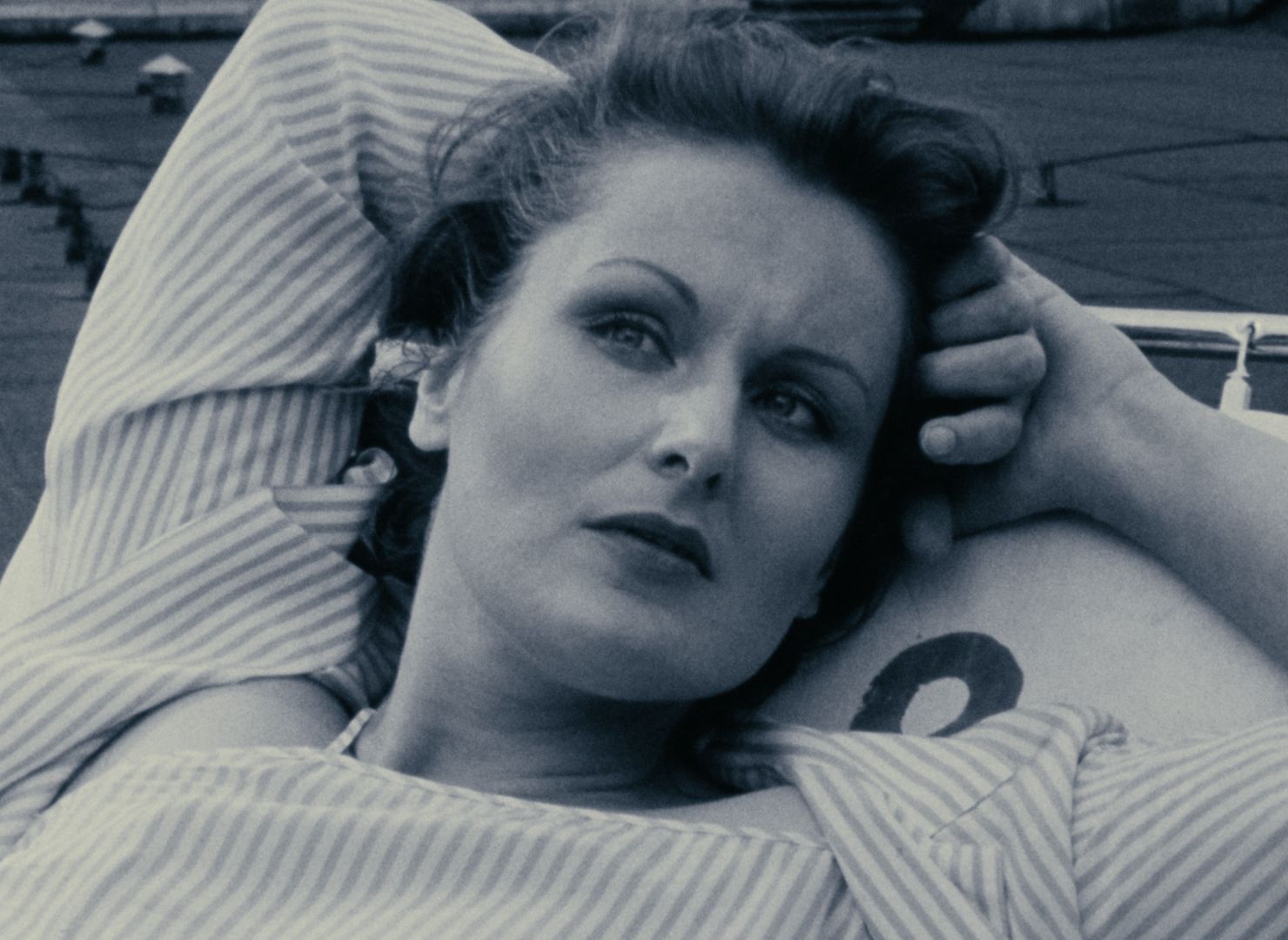
Isabelle is perfectly played by the seductively imperious Magdalena Montezuma, an actor with so many significant credits across the work of Fassbinder, Von Praunheim, Schroeter, Ottinger and others, that she embodies the word ‘iconic’, despite, or maybe because of, her early death from cancer aged 42.
Her extraordinary performances contained their own anarchic undoing, smearing the borders between fragility and dominance, artifice and truth, glamour and the grotesque.
As one critic said, “Her face was the locus of all this intensity: she was part Silent movie star, part medieval Madonna, and like the changelings of centuries past, her appearance stokes both alarm and awe.”
Both Schroeter and Von Praunheim cast Montezuma as Lady Macbeth for their TV operas, which played back-to-back on German television in 1970. In that same year, she played King Herod like a sulky teenager who became aroused by his stepdaughter, and ready to give her everything up for just one erotically charged dance in Schroeter’s version of Salome (1970). And she’s a stand-out crazed mental patient in his Day of the Idiots (1981).
In Macumba she is reunited with Frank Ripploh, whose film Taxi Zum Klo (1980) she featured as a nurse two years earlier. In this film Ripploh appears to play a character called Tannenzauber, which I think means Christmas Tree, a slimy conman in the rogue’s gallery of criminals, sociopaths, and blighted romantics
Isabelle is a flustered, frustrated writer, living in squalor, trying to write a caper about a detective investigating a crime that has not yet been committed.
On screen we see fiction and reality blend. Or do they? We can never really tell.
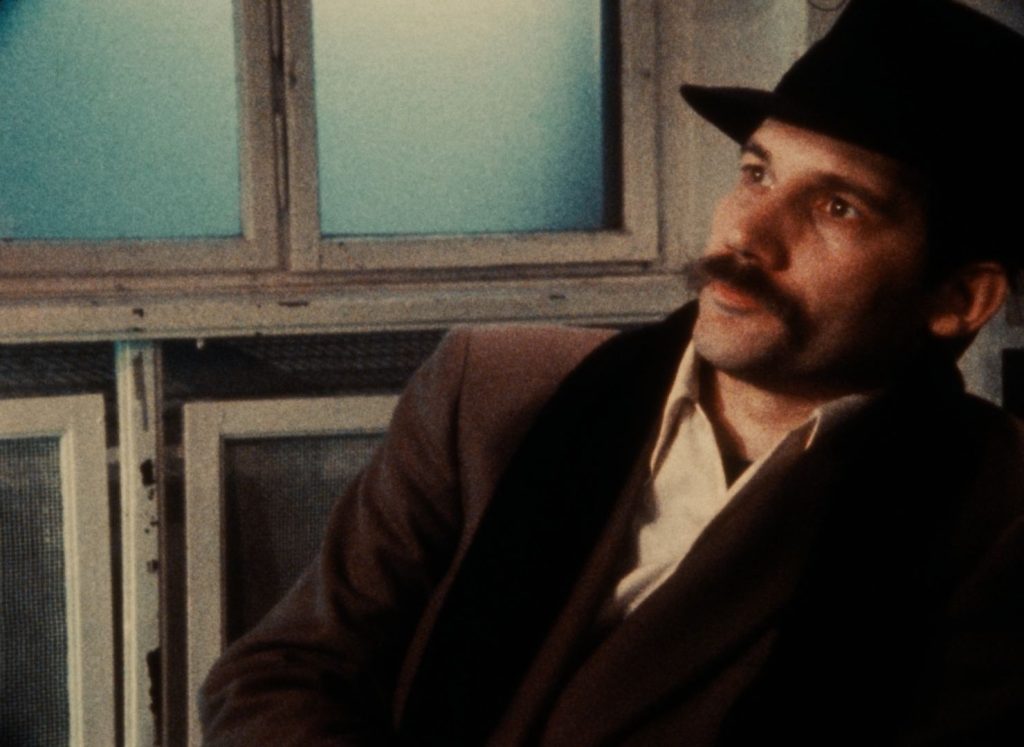
On the roof, Isabelle first says she does not know what Macumba is. There’s a sense that her character is floating away with the story she has invented. While the film is centred on the loquacious reverie of the author, maybe it is mostly about how art is never immune from contamination of those who surround its creation…
Enter in to her mind and our film is Max Taurus, played by Bernt Broaderup, a self-proclaimed detective whose name is derived from the Minotaur, and with good reason. As he roams the city, he is searching for an unsolved murder or a crime to be prevented. The old, dilapidated house, with the wrecking ball hanging over it like the sword of Damocles, piques his interest – it seems the perfect setting for the depths of the underworld.
Inside, he encounters a group of people intent on “desecrating themselves with immense pleasure.” Max risks getting lost in the labyrinth of the old building with its strange and hostile residents. In an atmosphere of repressed love and violence, he senses a future crime… This narrative strand in Macumbaevokes a world of imagery that draws from detective comics and crime thrillers.
Rosa von Praunheim called it “The most beautiful film about crime made by a woman.”
The film moves between dreamy monochrome and exuberant colour. We may think this distinguishes between what is dream and what is reality, but this world is not so simple, and the drift moves between the two registers.
Monika Teut explains, “MACUMBA entices us to look at the images, to recognise the sounds. This film desires the viewers – the women viewers – me. I see the film again and again in memory in order perhaps to discover something after all that could resolve the contradictions, assemble the fragments, close the gaps – something very specific – something of which I know that I cannot find it, because it does not exist. Macumba is what is missing. And yet – I search, and something in the film continues to elude me.”
For Isabelle, Macumba is the lost image of ecstasy. She says: “I will now call my “unknown longing”, Macumba.”
As you would expect from Mikesch, the cinematography is exquisite; exquisite with raw edges, literally as the camera concentrates on off centre shots and diagonal framing. All of which adds to the sense of on the balance, between reality and fantasy, love and death, decadence and decay, the virtues of violence.
As they admit, they are, “corrupted by boredom” and the consequence is “We are all cannibals”. Though, perhaps this observation extends beyond the walls of the crumbling house…
The music, crafted by Ed Lieber, Christian Geerdes, Ursula Weck, Fritz Mikesch leans heavily on rhythm, a unique soundscape, and the music of Mexican composer Silvestre Revueltas.
Revueltas himself was a blazingly energetic and politically charged musician, a whirlwind of a composer who lived through a time of great political and creative upheaval in post-revolutionary Mexico.
As Mikesch said, “The crash of the wrecking ball to the sound of Silvestre Revueltas’ music becomes the swan song of a way of life that drew its inspiration from the 1960s.”
The shorter film that we will see first is Execution: A Study of Mary.
This is one of Elfi Mikesch’s most important early works and a key example of late-1970s feminist experimental cinema in West Germany. We can see in it the influence of avant-garde film combined with queer performance aesthetics.
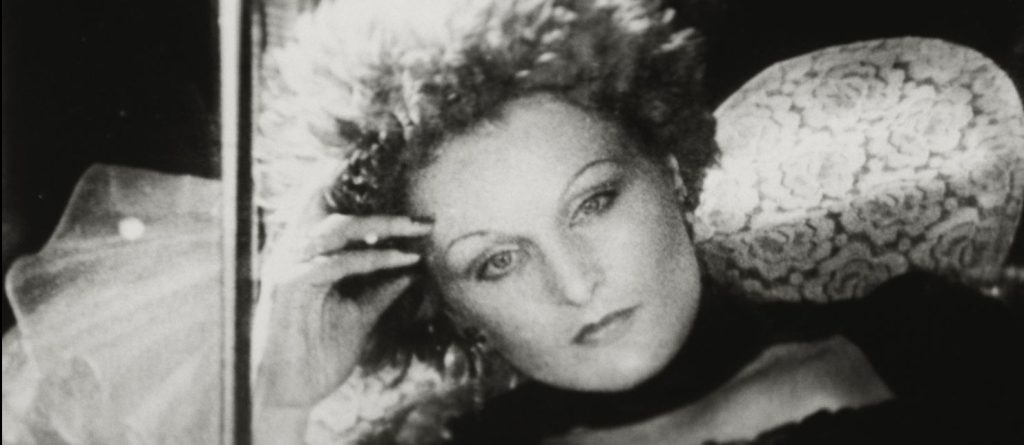
Magdalena Montezuma, here, is Elizabeth I to Millie Buttner’s Mary, Queen of Scots. She was also in Taxi Zum Klo and in Mikesch’s first film Charisma- A Remembrance of Death. Here, too, Frank Ripploh appears, as Paris.
Confronted with layers of conflicting information about what really happened between Elizabeth and Mary, and the men they loved, Mikesch decided not to try to be a historian, but to radicalise the narrative and condense it into striking images of passion, power, love, pain and death. A feminist reworking of martyrdom and female suffering. Perhaps inspired by the feminist practice of tape/slide presentations… Certainly important in the UK, but bit sure about in West Germany.
Mikesch said of her motivation to make the film:
“I always wanted to make stories out of photographs to create a dialogue between one picture and another. To me, two pictures represent a kind of film… Execution is a photographic film made up of individual images that points to the ambivalence of the two complementary media of film and photography.”
We can also apply this to the pairing of these two films. What can emerge watching them together…?
She said, “It is the drama of a woman who, in a time of upheaval, attempted a kind of liberal emancipation but became entangled in the traps of men. A study of Mary Stuart. […] I compressed the information into images of passion, power, love, pain, and death.”
This film is, in effect, a slideshow of exquisite single photographic images in haunting black and white, representing Mikesch’s own version of Mary Stuart. She assembles photographic sequences of tableaux of posed compositions accompanied by voice and sound montage, most prominently Harry Parch’s Delusion of the Fury.
The expressive black-and-white photographs capture individual moments of her gruesome story, with the drama created through the dynamic editing. In a sense, both films expose Mikesch’s lifelong fascination with performance as a spiritual and cinematic act.
Finally… as one reviewer out it- “I think there may never be a more interesting face to photograph paired with a more talented photographer than Magdalena Montezuma and Elfi Mikesch.”
This statement applies to both of these films. Enjoy!