
By Hyun Jin Cho
Welcomed into a part of Taipei where I had rarely spent time before, I returned each day to Huashan 1914 Creative Park, a former sake distillery and one of the main venues of the 15th Taiwan International Documentary Festival (TIDF).

Since its founding in 1998, TIDF has grown into one of Asia’s leading documentary film festivals, serving both as a professional platform for nonfiction cinema and as a meeting place for independent filmmakers whose works engage with questions of history, politics, and social change across Taiwan and the wider Sinophone world.
Beyond its institutional significance, I came to understand the festival through the films, conversations and encounters that animated it: moments of exchange in which different political histories, memories, and perspectives were brought into dialogue. It was within this environment that I found myself thinking as much about listening as about watching, as attending gradually became less an act of spectatorship than a practice of attentiveness across languages, voices, and mediated forms of speech. Among the festival’s wide-ranging sections – bringing together contemporary and historical works, as well as Taiwanese and international programmes – I focused primarily on the works by filmmakers from Taiwan and across neighbouring regions of Asia.
Most of the films I encountered were spoken in Mandarin, Taiwanese or Indigenous languages, while conversations beyond the screen took place across different gradients of English. Filmmakers, audiences, and industry guests met not in a shared language but through a shared effort of translation, gesture and patient – often playful – adjustment. This year, for the first time, the festival introduced AI-assisted live translation for non-Mandarin speakers, allowing written translations to appear almost simultaneously on personal devices. Yet this simultaneity remained in flux, producing exchanges that were at once immediate and distant, expansive and uneven.
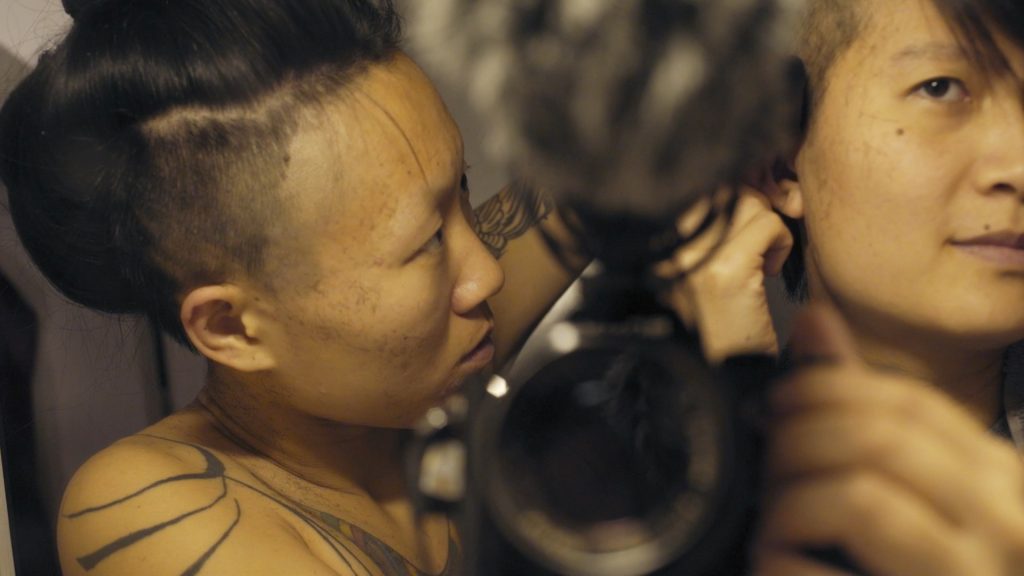
Within this linguistically layered environment, documentary practice came into focus for me not as the transparent transmission of information but as a form of mediation shaped by delay, compression and transformation, in which meaning rarely arrived intact yet nonetheless continued to circulate and accumulate across different registers of understanding. Rather than functioning as a barrier, translation itself became part of the encounter, underscoring that meaning does not reside solely in semantic content but is also carried through tone, rhythm, gesture and the embodied presence of voices as they are heard. Voice appeared as one of translation’s primary forms: a practice through which experience is felt, mediated, and shared without ever becoming fully transparent. In this context, two debut features concerned with family and belonging – Xixi and Spi – stood out for the way each positions the filmmaker’s voice not as a neutral narrative device but as a collaborative and situated presence through which documentary form is negotiated and remade.
This is especially evident in Wu Fan’s film Xixi, where voice functions less as an explanatory device than as the reflective record of an evolving relationship through which the filmmaker’s own questions emerge. During her travels across Europe after graduating from film school, Wu encounters the seemingly free-spirited performance artist Xixi dancing alone at a festival. Drawn to Xixi’s instinctive way of moving her body as well as traveling through the world, Wu forms a friendship that develops over many years. Although the film, as its title suggests, centres on Xixi, it is equally a film about Wu herself, whose search for identity and belonging is shaped by her relationship to the Taiwanese family from which she comes and by her desire for creative freedom. The film traces Xixi’s life as an artist and mother in all its beauty, complexity, and contradiction, while simultaneously revealing Wu’s own familial relationships and philosophical search for meaning as they surface through their encounter.
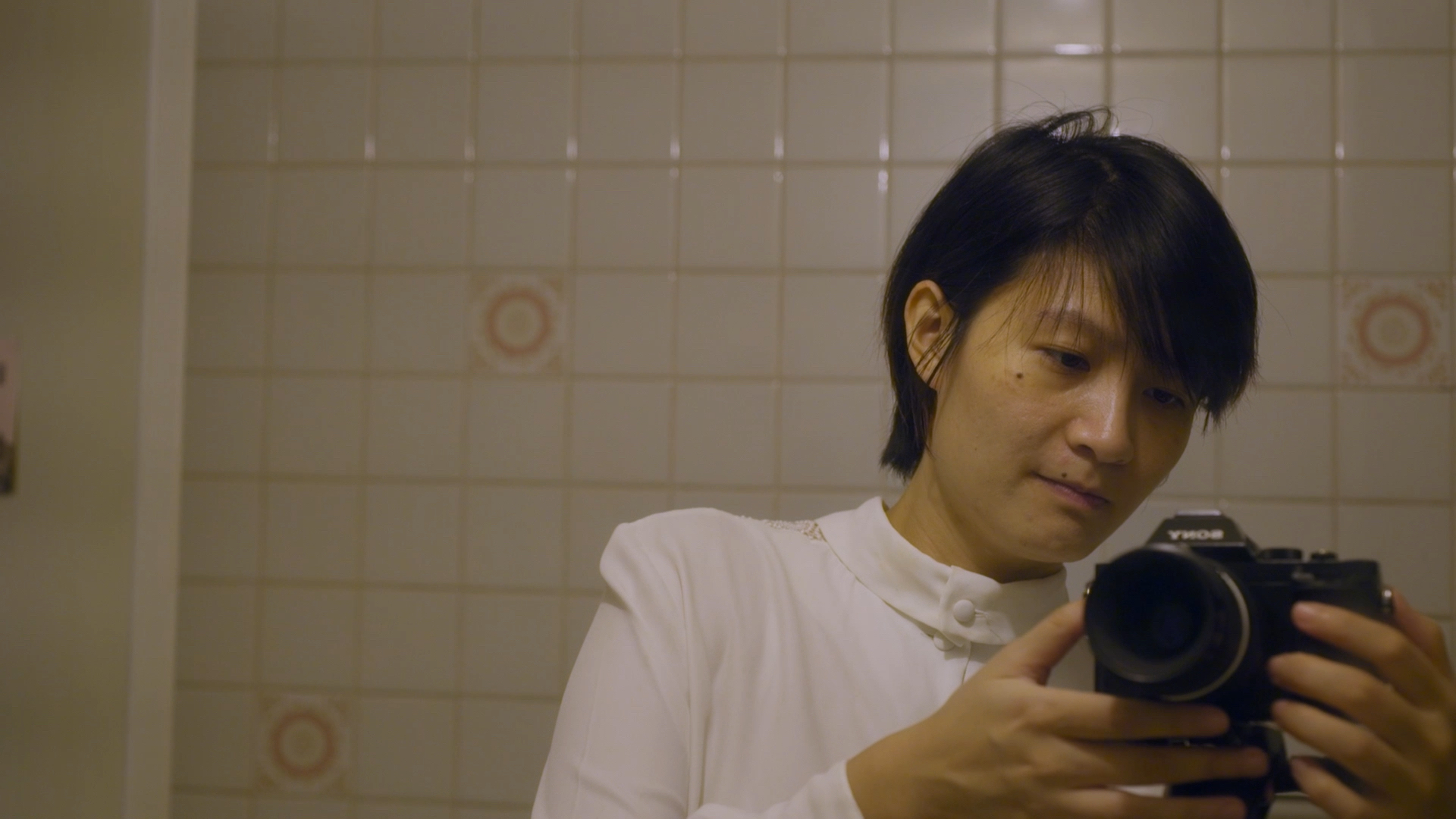
We first see Xixi walking through the rain to collect her young daughter, Nina, from school, while Wu enters the film through her voice, conversing with Xixi from behind the camera. Before we see the filmmaker, we hear her negotiating curiosity, intimacy, and respect within their conversation. The film gradually reveals how the two women met and how Wu’s own existential questions – Who am I? and What kind of woman am I? – come to be explored through her friendship with Xixi. Midway through the film, Wu appears on screen, filming herself getting dressed in a white collared shirt as part of a video diary she intends to share with Xixi. She recounts a story told by her grandmother: every person is born like a stone with rough edges that must be worn smooth; if those edges are not removed voluntarily, society will smooth them instead. Visiting Xixi after her grandmother’s death, Wu realises that she must travel beyond this inherited narrative towards a space where her desires, freedom, and rough edges might remain intact.
Yet rather than presenting liberation as escape, both Wu and Xixi ask what forms of freedom remain possible while living within inherited social responsibilities and moral expectations, particularly in relation to motherhood and care. In this sense, Xixi becomes a collaborative and open-ended inquiry between the two women rather than a straightforward portrait of one by the other. Calm, reflexive, and quietly searching, Wu’s voice does not claim authority over Xixi’s experience but instead becomes an expression of proximity – a form of translation: an unfinished, relational attempt to understand another person’s life while simultaneously enquiring into her own.
If Wu Fan’s voice in Xixi treats translation as a tirelessly collaborative practice through which filmmaker and subject come to understand one another – and themselves – Sayun Simung’s Spi begins from a slightly different premise: some experiences cannot be translated but marked (meaningfully) through translation. Rather than attempting to overcome this limit, the film’s voice dwells within it, becoming less a vehicle of explanation than a record of its own incompleteness. At its centre is gaga – the principle that binds Tayal families and communities together. Gaga flows between land and rivers, birth and death, linking the living with their ancestors; life, the film suggests, cannot exist without it. Despite its profound significance in Tayal community life, the impossibility of translating gaga into another language becomes an important question in itself, suggesting that some forms of knowledge exceed linguistic definition because they are sustained through practice, memory and shared experience. Here, Simung’s voice-over functions both as a form of translation and as a medium of transmission, carefully sounding the Tayal words she has inherited while carrying them beyond the community to those who do not speak the language. Her voice remains modest, yet clear and attentive, lingering over Tayal words – spi, tuxtux, puriq, mulah – each of which carries layers of Indigenous tradition, memory, and ancestral presence. Throughout the film, Simung asks her grandmother to correct her pronunciation and deepen her partial understanding, foregrounding learning itself as a process of translation.
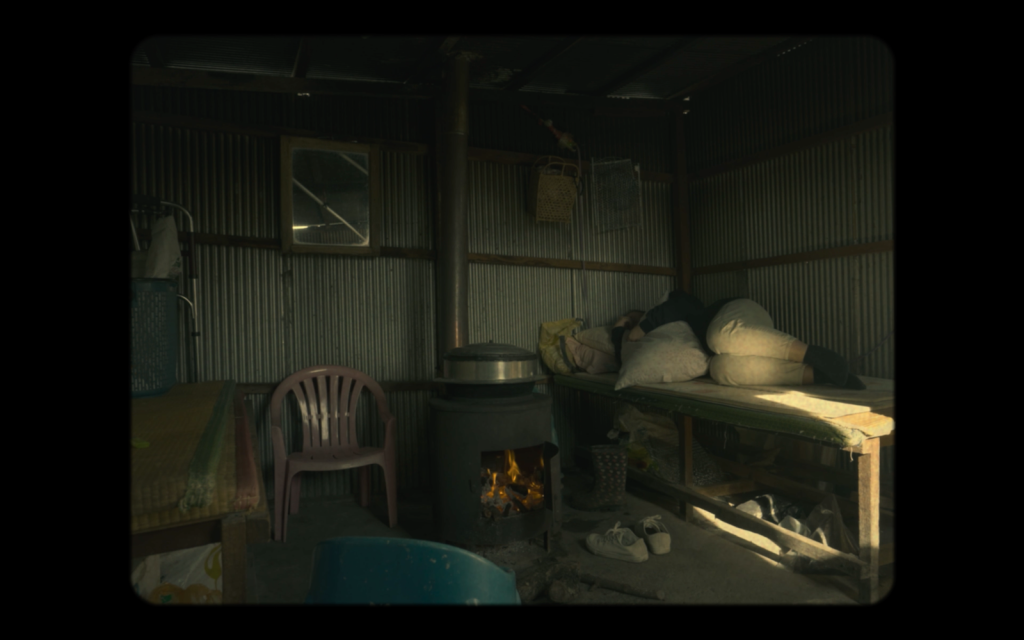
Perhaps this approach to voice emerges from a distinct understanding of the self. Where Xixi explores the negotiation between individual autonomy and familial expectation, Spi does not separate the self from family, and in fact extends belonging beyond kinship to encompass relationships with ancestors, land, community and language. “What does it mean to be a real Tayal in 2025?” becomes the filmmaker’s central question: a deeply personal one, but one that at once reflects a collective uncertainty. As an imperfect Tayal speaker herself, Simung comes to mirror the community she documents, allowing personal reflection to become a way of honouring collective history and culture. Here, belonging is not figured as the counterpoint to freedom but as the network of connections through which freedom itself acquires meaning. The film’s proposition that “the past is our future” articulates this beautifully. It refuses a linear understanding of intergenerational flow, proposing instead that continuity moves in both directions, with the past continually translated into the present and the present rooted in ancestral knowledge.
Looking back, what stayed with me from this year’s festival was less the certainty of what has been or could be translated than the different ways voices moved between languages, relationships and histories. Rather than overcoming distance, voices in both Xixi and Spi remain attentive to it, allowing meaning to emerge gradually through listening, conversation and shared acts of attention. There is, perhaps, a quiet feminist resonance in this way of approaching translation. Rather than functioning primarily as a means of mastery or of self-expression alone, translation becomes a practice of relation – one shaped by uncertainty, learning and reciprocity. The first-person perspective and voice-over do not resolve contradiction but create space for it, suggesting that understanding emerges not despite its situatedness but through it. Moving between the films, incomplete conversations, and voices that continually exceeded precise translation, I found myself listening differently: less for complete explanations than for the ways understanding is negotiated, questioned and shared.
*
Hyun Jin Cho works as a Programmer for the BFI London Film Festival, focusing on non-fiction cinema and artist moving image, and co-programmes Listen with Your Eyes: Experimental Films for Families.